
Why Your Wallpaper is Peeling
Wallpaper Installation Edmonton | Why Your Wallpaper is Peeling (And How to Fix It)
Hey everybody, welcome back to the Walls Revived YouTube channel. I'm here with Leanne Ebert. She's the owner and operator of Walls Revived in Edmonton, Alberta, and she is a paint and wall covering specialist. What is the other thing? You are a color specialist as well, right?
That's right.
Nice. So, color specialist in Edmonton, Alberta. And today we're going to be talking everything about the dos and don'ts of wall coverings. Think your walls are ready for wallpaper? Most homeowners discover the hard way that skipping one crucial prep step can mean peeling corners within weeks.
With over 17 years in the painting and decorating industry, Leanne Ebert has seen it all, from DIY disasters to professional transformations. In this conversation, we're pulling back the curtain on what really works when it comes to wall coverings, from peel and stick to traditional wallpaper, so you can avoid the costly mistakes and create a finish that actually lasts.
I've got an interesting statistic here. So, wallpaper accounted for 39.32% of all wall coverings in the market in 2024, with peel and stick options driving a 6.78% growth rate in residential applications as DIY adoption continues to surge. This is from a Mordor Intelligence wall covering market report.
I've got a quote here from Joa Studholme, color curator for Farrow & Ball: "Wallpaper is taking the design world by storm. There is no greater transformative element in our arsenal than wallpaper, which will reflect our unique personalities." I think that's true. I'm seeing a resurgence of wallpaper and, you know, like my son, he's a fan of the 1920s era stuff, right? And all of that Art Deco style of wallpaper, wall coverings, and design. He really loves that stuff. And I'm seeing kind of a resurgence of that coming in, yes, with the big, you know, tropical prints and, you know, black and gold and deep rich colors, right? And I think it looks great. I think it looks cool.
Regarding wallpaper and, you know, styling, like what are you seeing as far as designs, styles, textures, and colors coming back?
Oh, yeah. It is growing. There's so many, so many options that you can choose from online mostly. I've seen a huge growth in murals. So, you can even actually take like your favorite photo and companies will print it and you can have it on your wall. So many options. It's actually quite overwhelming if you don't know where to start.
All right, that probably leads me to my first questions. What are some of the big questions that homeowners have concerning wallpaper?
The first one is, "Is this a thing?" And I'm like, "Oh, yeah. No, definitely it is." And they just want to know the process. They're like, "Can you help me pick it out?" I can. I do just refer them to certain websites that they should go off of, based on like, I've used those products and I'm comfortable with them. I can also give direction with that, but they're all just, you know, "What's next? How do I do this? How much does it cost?" Of course, right? And, "Is it temporary?" And that's where the peel and stick comes into play or, you know, "Is it going to be a huge mess?" And, you know, just all these questions that they don't know, right?
Yeah. Well, that is a, you know, question and concern—like how hard is it to get off? Is it like removing tile from a wall where it's basically destroyed afterwards?
It can be. Grasscloth? Oh, yeah. Pain in the butt.
Okay, good to know. So before you jump into wallpaper, you know, if you're in the Edmonton area and surrounding communities, talk to Leanne from Walls Revived, and she can give you clear direction on what to do, what kind of wallpaper to select, and what the process looks like. The next question we've got here is: walk us through what proper wall preparation looks like. What are most people missing when they try to DIY their wallpaper installation?
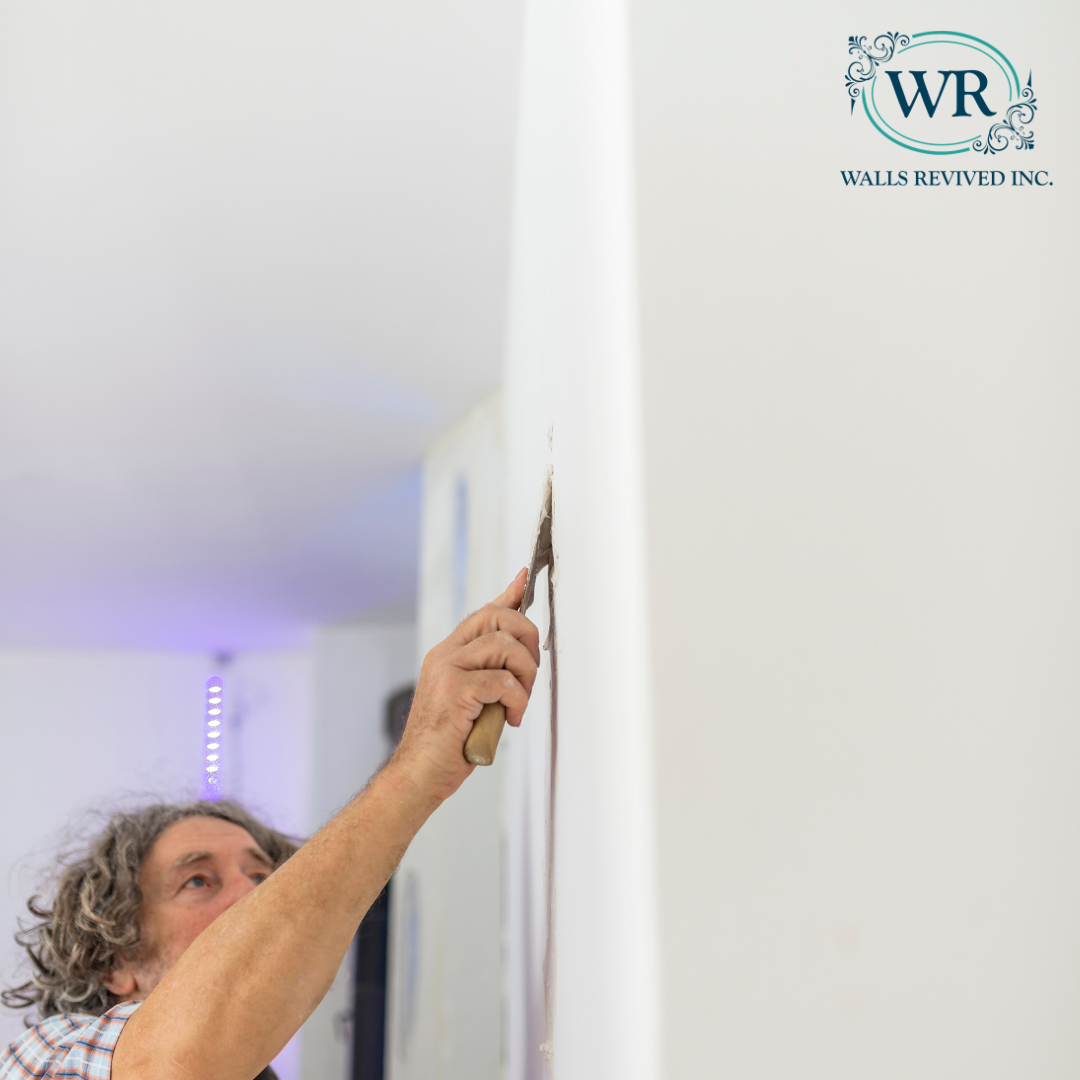
Okay. So first off, if your house is freshly painted, you do need to wait 30 days for the paint to cure, or else you might have issues behind the wallpaper, like extra bubbling, off-gassing, all that kind of stuff. The other thing is you need to have a flat, smooth surface. So even like a couple, like screw holes, you'll see them through the wallpaper.
Oh wow.
So yeah, it has to be a smooth surface. Clean, not dirty, and wiped down. Like, that's essentially the basics of wall prep for wallpaper.
Okay. So, if people don't take the time to properly get the wall smooth, then they'll have issues.
That's right.
Side question. So, let's say they just had the thing drywalled, right? And they didn't paint it yet. Can you put wall coverings on that? Can you put wallpaper on that?
It needs to be primed at the very least.
Okay.
The Secret to Long-Lasting Wallpaper: Proper Preparation
Primed and sanded so that it's smooth because, like, drywall primer—getting into painting—it will create like a "tooth" almost. It's kind of rough, so you’ve got to sand it down. So yeah, you can do that. But normally, new home builds, I do tell them you’ve got to wait.
Yeah. So you have to at least prime it and then you're good to go.
And here's the other thing too. If you choose a dark pattern wallpaper, you should technically paint your wall black behind it or a dark color just in case seams open, but we'll get into that too because there's products that I recommend using that avoid, you know, seam openings and stuff.
For sure. So, you specialize in peel and stick wallpaper installation. So, what makes this different from traditional wallpaper and when would you actually recommend one over the other?
Okay. So, peel and stick is growing in popularity and for good reason. It's ease of removal. Like when you get tired of, you know, the pattern and whatnot, you can technically grab it from a corner and lift it off. I have come across ones that are super sticky. That might not be the best outcome, but I prefer peel and stick because of the seams, right? Because it's essentially a gigantic sticker.
Yeah, of course.
Right. And traditional wallpapers, especially the pre-pasted ones, the ones where you roll it through some water and whatnot, those tend to shrink. And then when they shrink, that's when you see seams, right? Or you know, just after a while, like the seams open up. With a gigantic sticker, if it happens to, like, bubble or whatever, you just tell your client to use a credit card or whatever and just smooth it out. It's much better that way. It's a little bit more pricey upfront for the material, but I do charge less to install it because there's a lot less mess. There's no adhesives that I'm using.
And I have noticed that these companies, like, they are offering peel and stick options as well. The one downfall is that there is like—there's no texture on it. So traditional wallpapers, you can get like real high texture and some glossiness and, you know, fancy...
Yeah. Yeah. Textures, patterns.
Exactly. Right. So they are lacking in that. But there are some companies that are really coming along and getting some good graphics and whatnot. So, the other question was: prefer one over the other? You know, if a client falls in love with a certain pattern or a design and it only comes in one or the other, like, that's kind of like the way to go. No, but I just—I kind of move people towards the peel and stick. It's just you won't have the headaches when you're, you know, tired of the pattern, right?
Yeah. Easier to take off.
That's right.
Yeah. Gotcha. Okay. That's great. So, next question I've got here. Let's talk about Edmonton specifically, and you work in, you know, some really nice homes in Edmonton, right? How do our temperature swings and dry winter climate affect wall covering choices and installation? What should local homeowners be thinking about?
So, wallpaper should be acclimatized when you first purchase it. Meaning that, like, you should once it arrives in your house, you should have it in your house and hopefully that specific area for about 48 hours, okay? Because it has to acclimatize to the environment. But you're talking about, you know, our cold weather and our warm weather shifting. There's a chance that seams might open, right? So, all the more reason to probably use peel and stick, right? It’s a little bit more flexible as well because it's like a vinyl kind of product or whatever. So...
So it has some give in it.
It does have some give.
Nice.
So, I'd recommend that again.
Perfect. Great. Good answer. All right. So, what are the most common mistakes you see when people attempt to install wallpaper themselves? And which ones are the hardest to fix after the fact?
Okay, it's usually the lack of planning with the wallpaper, especially if there's a pattern. Like, that's just getting into the nitpicky, but I have seen where they just don't match up the pattern from the different strips. And I'll just give an example. Lately, I went into a doctor's office and they had wallpaper on the walls. And of course, I have to go look. I'm curious, right? And I'm like, "Oh, where are the seams?" And I'm looking. I'm like, "Oh, there it is." Because they didn't even bother. Like, yes, it was a hectic pattern, but like, they didn't even bother trying to match it up and I'm like, "What the heck?" So that to me is just laziness as well. But, and like the second part of the question, how do you fix that? I don't think you really can.
Yeah.
You just got to live with what you did.
Live with your consequences.
That's right.
You papered the wall. You have to live with it.
Peel and Stick vs. Traditional Wallpaper: Which is Right for You?
That's right. I mean, unless it's peel and stick. Go back to this. You could probably lift it up and reposition, but then, you know, where is this misalignment? Is it in the middle of the...
Yeah. Yeah. Yeah.
You know, honestly, the trick or the key to wallpaper is you have to get that first strip perfect. It has to be perfectly lined up. You have to have a laser level or, you know, like some sort of level. I actually draw on the wall. You have to, like, perfectly... it takes a lot of time. Like, I spend at least an hour or more planning out the whole project.
Yeah, that first strip is crucial to get perfect. Because walls are always straight, right?
Oh, yeah. No, they are never straight.
Okay. Well, that brings me to a question that we talked about earlier regarding ordering quantities, right? Yes, specifically because, you know, these patterns—if they're large patterns and, you know, you got to line them up—people often make mistakes ordering. So let's talk about that.
Yes, that is one of the biggest mistakes. I have clients that reach out and they're just like, "Oh yeah, I ordered some wallpaper and I thought I was going to have time to do it. I just haven't got around to it. Can you do it for me?" And I'm like, "Sure. How much did you order?" Like, I have to get details from them and I always get them to send me, like, a picture of the wallpaper label so I can see what I'm dealing with and, "Please send me dimensions of the room and whatnot." And oh, I'd say more than half the time they don't order enough because they don't know. It's not their fault.
Especially on the websites, they're asking for square footage and you can't do that because it doesn't apply unless it's just, you know, like a wall, just blank. Then that can, you know... but because there's different patterns, you have to line up the patterns and then you're wasting this up here, right? So, there's definitely product waste when it comes to wallpaper with patterns and you have to consider that.
As a little cheat—so, usually, and this is traditional wallpaper, not the peel and stick. Peel and stick is usually like one roll is one strip. So, just consider that. Usually, the traditional wallpapers, you can get three strips out of one roll and a standard strip is about 18 inches wide. So, this is just a quick little cheat sheet, but like, I always ask, "You know, please send me that label so that I know," and I can even help them with ordering, right? They haven't ordered yet.
So, yeah, if you haven't ordered your wallpaper yet, maybe think about ordering extra, just in case.
Exactly. Yeah.
Because it may not turn out to be extra, it may just be enough.
That's right. Yeah. Okay. And check with the return policies because sometimes you can't. But and then the worst-case scenario is that I start a job—well, usually I don't start unless I know the quantities are, you know, good—but there's batch numbers on wallpaper. So if you're like, "Oh, I'll just order more," the coloring might not be the same, right? So it's... yeah. A little finicky.
Yeah. Put that one behind the door.
Exactly. There you go.
Hide it somewhere. Okay, thank you for that. So can you break down the timeline someone should expect for a wallpaper project? I'm talking about painting, wait time, prep work, installation. What does realistic planning look like?
Navigating Edmonton’s Climate: Protecting Your Wall Coverings
Okay, so typically someone reaches out to me, they're just like, "Hey, I want to wallpaper this wall in my bedroom. You know, what are the steps?" So, I direct them to—like, yes, there's still places you can physically go and select your wallpaper and I can, you know, refer them out. But I usually say, "You know, check out these websites. You know, do you have a feeling, like a mood you want to create? Like, do you want to do landscape? Do you like damask or whatever?" Like, you know, get an idea and be prepared. It is overwhelming. There's so, so many choices. But generally, people kind of have an idea of what they want. So then they go and they order and nowadays it's really quick. Like, you can probably order and get your wallpaper within a week or two.
Okay.
So it's just a matter of scheduling into my schedule. But yeah, it's very straightforward once they figure out the pattern and then, you know, I take the room dimensions, I can give them a quote, and then we just go from there.
Okay. It's easy. So start to finish, how long you reckon?
On average, three weeks start to finish. And that's me, you know, finishing and putting you in my schedule.
All right, sounds good. Perfect. Now, let's talk about when someone should absolutely not use wall coverings. Are there walls or situations where you'd say just paint it instead?
Yeah. I mean, if it's highly, highly textured walls like—like stucco. You know, not only will you probably see the stucco behind the wallpaper, it's going to be hard to stick to it. Also, like, high humidity areas like maybe your bathroom, especially if you like taking long steamy showers. Don't really recommend putting wallpaper in your bathroom with that.
So, yeah, that makes sense. Yeah. Right. Texture. Yeah. Not so good.
That's right.
Yeah. Good. Outside. Don't put wall coverings outside.
There you go.
Avoiding the Biggest Ordering and Installation Mistakes
All right. Talking about textured walls. Textured walls are pretty common in older Edmonton homes. What are the options when somebody wants wallpaper, but their walls aren't smooth?
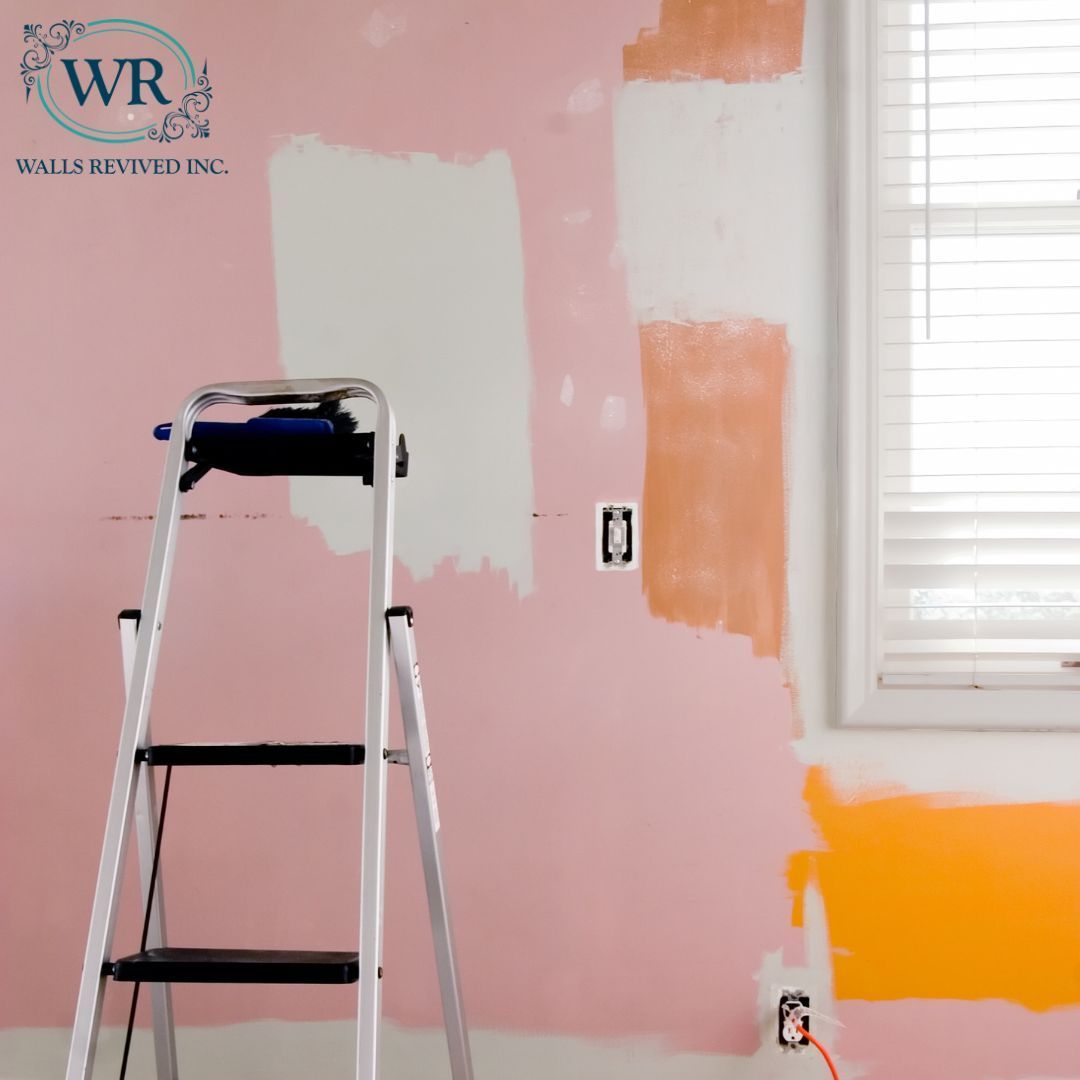
Yes. So, there is an option. You can have a liner on those walls. So, like, I can backtrack to the last question, but like, it is possible to put wallpaper over like a textured stucco kind of thing. I'm not really sure if it's going to be a super desired result or super smooth, but if they absolutely want wallpaper, we can make it happen. The other options—like, you can paint a mural. You know, I know people that do it. I could probably do it myself. I am an artist when I'm not painting. But or there's other options like if you want something on your wall like to liven it up, like we can do a faux finish, like we do lime wash. There's other things that we can do.
Mhm.
So...
Yeah. So rather than, you know, getting stuck on getting wallpaper, you can... there's other options. So and you have to talk to somebody who is experienced in it. Not your everyday painter is going to have the the right tools or the skills or knowledge to do these things. You have to talk to somebody like Leanne from Walls Revived because she knows and she's done it before. And so Leanne's not just a painter. She is more of a designer and brings those qualities to the project. Right.
Okay. Let's talk about wallpaper choices. There's so much wallpaper available online now from budget to premium. Yes. How do you help clients navigate quality differences and what should people actually be looking for?
I have installed some cheaper wallpapers and I can tell it's almost like tissue paper—or not tissue, like wrapping paper.
Okay.
We try and avoid those. So, but I know quality is improving. So years and years ago when someone was like, "Oh, I bought this off of—I can't even remember some sort of website—" that I was like, "I don't know, not Amazon, but like..." I'm like, "Okay, we'll see." And sure enough, then... or just an indication like, "Oh, this roll only cost me $30." And I'm like, "Oh, boy." You know, it's just—it's probably just like, it's not going to look good in the end. Quality does matter for sure. So, I do direct my clients to like a couple websites that I'm familiar with and that they have really good quality products. And yeah, like if people want my opinion on something that they're interested in getting, I will definitely let them know.
Okay, perfect. Yeah. No, that's great. Now, looking ahead, where do you see wall covering trends going, especially for Edmonton homeowners who want something that feels current but won't look dated in 5 years?
I mean, wallpaper is here to stay and I foresee it sticking around for a long, long time. And just, you know, people choose the wallpaper pattern because they love it. And, you know, you do grow tired of it. So, you know, when they get tired, they'll just remove it and replace it with something else. Hence the peel and stick.
Yeah. All right. Well, thank you so much, Leanne, for sharing all that valuable information about wallpaper for wall coverings for Edmonton homeowners. And how can they get in touch with you?
Oh, easy. You can go onto my website, wallsrevived.com. You can reach out to me by phone number: 780-232-5540. If I don't answer right away, please send me a text message because I'm usually out there installing wallpaper or painting walls.
There you go. There you have it, folks. Thanks so much for joining us and we'll see you in the next video.